The Damper Setting Isn't Difficulty: Why Rowing at 10 Is Slowing You Down
Quick Answer: The damper doesn’t set difficulty — it sets how much air enters the flywheel housing, which changes how rowing feels (heavy like a barge at 10, light like a racing shell at 1), not how hard you work. Intensity comes from how hard YOU pull. Most rowers — including competitive ones — live at damper 3-5, where the stroke rewards speed and technique instead of grinding your back. Cranking it to 10 isn’t advanced; it’s rowing a heavier boat badly.
Walk past any gym’s rowers and you’ll find the damper levers parked at 10 — because 10 looks like ‘hardest,’ and who wants to train on easy mode? Except the damper was never a difficulty dial, and the people who row fastest almost never touch the top settings.

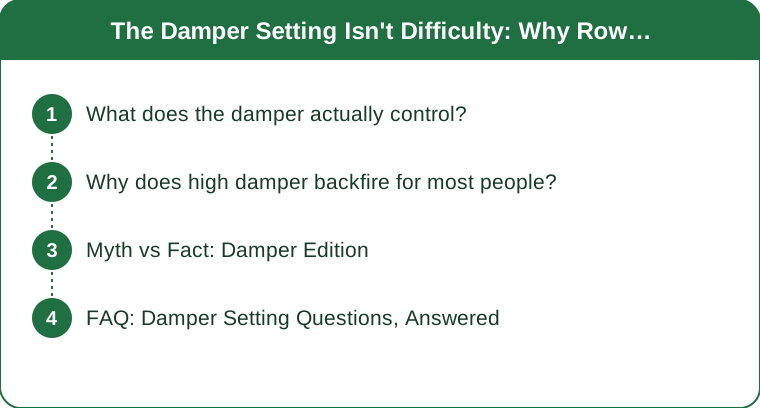
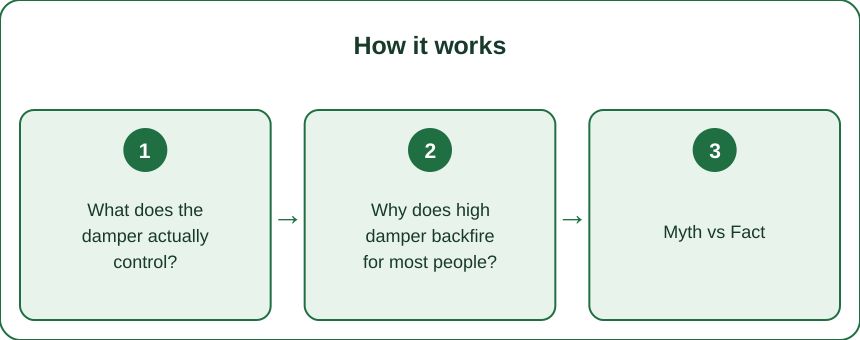
What does the damper actually control?
Mechanics first: the damper is a vent on the flywheel cage. High settings let more air in, so the fan grabs more air and the flywheel slows down faster between strokes. Low settings restrict airflow — the wheel spins on with less resistance.
What this changes is the feel of each stroke: at 10, every catch feels heavy and slow, like rowing a loaded barge; at 1-2, the stroke feels quick and light, like a sleek racing shell. What it does not change is the work: the monitor measures your actual power output (watts, split time), and you can produce identical watts at damper 3 or damper 10 — the machine just distributes the effort differently across the stroke.
The rowing-specific concept here is drag factor — the measured number behind the damper setting (air density and dust affect it, so damper 4 on two machines can feel different). Serious training programs prescribe drag factor ranges, and those ranges translate to roughly damper 3-5 on most clean machines — the zone that mimics an actual boat on water.
Why does high damper backfire for most people?
Three costs of the barge setting:
- It converts rowing into slow grinding: heavy catches favor a muscled, back-heavy pull over the fast leg drive that rowing technique is built on — you’re training a slow strength movement instead of the explosive leg-connected stroke that produces speed.
- It loads the lower back: the heavy-feel stroke invites over-reaching and yanking with the torso — the classic gym-rower back complaint traces to damper 10 plus tired form far more often than to rowing itself.
- It caps your stroke rate and your engine: at heavy settings, sustaining 24-28 strokes per minute becomes exhausting for the wrong reasons — most people slow to a grind, and their cardio system never gets the sustained rhythm work the machine is best at.
The reveal that convinces skeptics: set damper 4, hold the same split time you rowed at 10, and notice your legs doing the work while your back stops complaining. Same watts, better stroke, longer sustainable sessions — the monitor doesn’t care about your lever position, only your power.

Myth vs Fact: Damper Edition
Myth: Damper 10 burns more calories. Fact: Calories track power output (watts), which the monitor reads directly — identical splits at damper 3 and damper 10 burn the same. The 10 just makes the same calories feel more like moving furniture.
Myth: Low damper is for beginners, high for advanced. Fact: Backwards in practice — experienced rowers cluster at 3-5 (drag factors mimicking real boats), and erg racing at high levels happens there too. High damper has legitimate niche uses (short strength-focused pieces, some sprint work), which is exactly what a niche tool should have: occasional deployment, not a permanent parking spot.
Myth: The damper is like bike resistance — you need it high to progress. Fact: On a bike, resistance IS the load. On a rower, YOUR pull is the load — progression lives in split times, stroke power, and session length, all visible on the monitor. The damper just chooses which boat you’re pretending to row; the engine improvements come from how you row it.
The one-sentence takeaway for the whole gym: set it at 4, forget the lever exists, and race the split instead.
FAQ: Damper Setting Questions, Answered
What should a beginner actually set?
Damper 3-4, full stop — learn the stroke sequence (legs, then body, then arms; reverse on the way back) at a setting that rewards it. Revisit the lever only after the stroke is automatic, and even then mostly don’t.
When is high damper legitimately useful?
Short power pieces (10-20 stroke max efforts), some strength-endurance intervals, and drag-factor-specific training with a purpose — dosed like heavy lifting: occasionally, fresh, with good form. As an everyday setting it’s the rowing equivalent of doing every run in a weighted vest.
Does damper setting matter for rowing ‘wattage’ workouts from apps?
The watts are damper-independent — hit the target at whatever setting lets you hold good form, which for nearly everyone means 3-5. If a workout feels back-grindy at your current setting, dropping the damper two notches usually fixes the stroke before any coaching cue does. This is general information, not medical advice.
TL;DR:
- The damper sets the feel (barge vs racing shell), not the difficulty — your pull sets the difficulty, and the monitor measures it honestly
- Damper 3-5 is where technique, leg drive, and sustainable rhythm live; 10 trains grinding and loads the back
- Same split = same watts = same calories at any damper setting
- High damper is a niche tool (short power pieces), not an achievement level
The lever was never a difficulty dial — it was a boat selector, and you’ve been voluntarily rowing the barge. This is general information, not medical advice.
Keep Reading
This article is for general informational and styling purposes only. Fit, sizing, and product availability may vary.