The Rowing Drag Factor Setting Almost Nobody Adjusts Correctly
Quick Answer: The damper lever (1-10) is not your resistance number — it changes airflow, not force directly. Your actual drag factor (visible in the monitor menu) should sit around 100-120 for most women, checked with the machine’s built-in drag factor test, not guessed from the damper alone.
You set your damper to 7 because a friend said ‘higher is harder’ and left it there for a year. Meanwhile your drag factor — the number that actually determines how much force each stroke takes — has never been checked once. Those are two different things, and only one of them matters for technique.

What’s the actual difference between damper and drag factor?
The damper (numbered 1-10) is a physical lever controlling how much air flows into the flywheel housing — think of it like a bike’s gear range, not the actual resistance.
Drag factor is the real number, calculated by the monitor from your stroke, that reflects actual resistance in Newton-meters. Two rowers on the same damper setting can have completely different drag factors depending on flywheel condition and even room temperature.
What drag factor should you actually use?
For most women, 100-120 is the sweet spot for technique-focused training — enough resistance to feel real, not so much that form breaks down chasing power.
Sprinters and taller/stronger rowers sometimes go to 130-140. Beginners should start closer to 90-100 while building stroke mechanics — high drag factor with poor technique just reinforces bad patterns faster.
How do you check your actual drag factor?
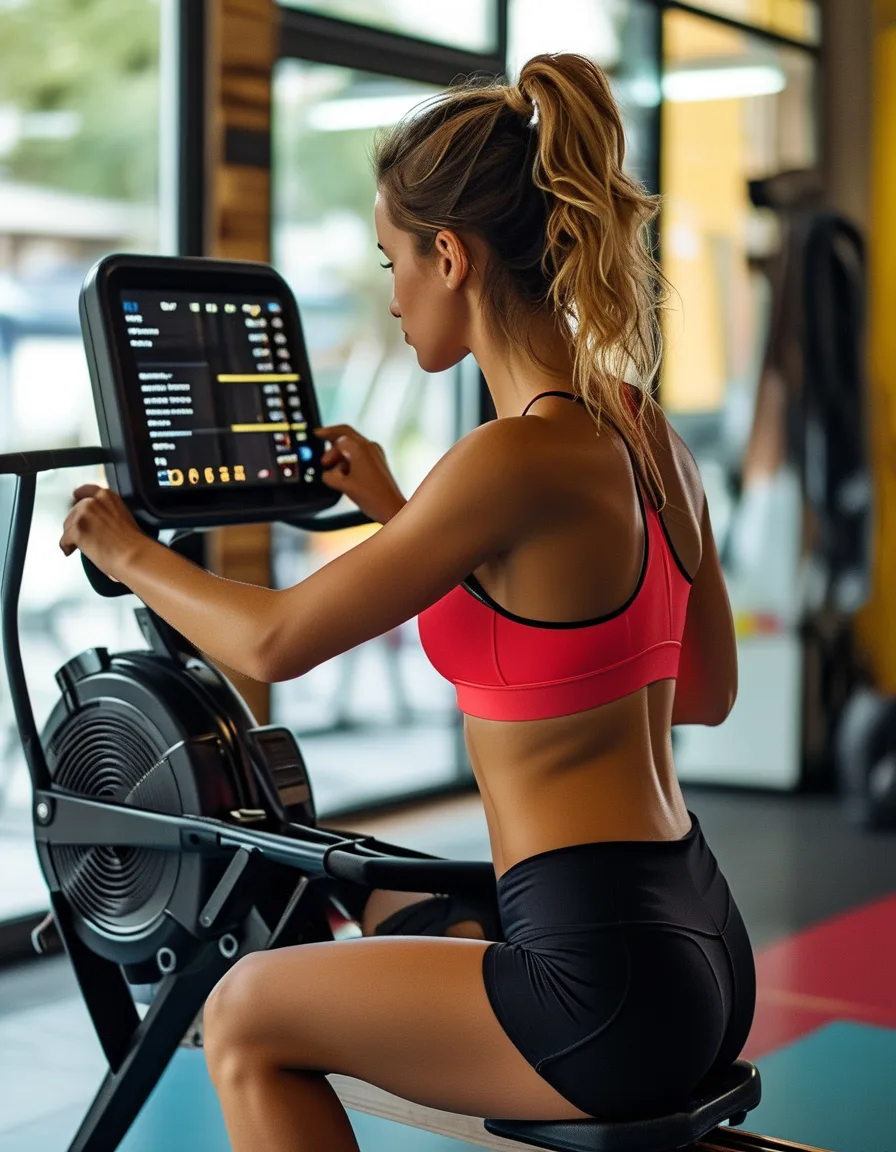
Most PM5-style monitors have it built in: menu → display drag factor, then take a few strokes. The number updates live.
Adjust the damper lever up or down until the displayed drag factor lands in your target range — usually damper 3-5 gets most people to 100-120, which surprises people expecting to need it near 10.
5 Mistakes Everyone Makes With Damper Settings
1. Equating higher damper with a better workout. It’s resistance type, not effort level — you can get an equally hard workout at damper 3.
2. Never actually checking the drag factor number. Most rowers set-and-forget the damper without ever seeing what it translates to.
3. Copying someone else’s setting. Drag factor should scale to your strength and technique level, not a stronger friend’s.
4. High damper for endurance work. Lower damper (3-4) better mimics on-water boat feel and is easier on joints for long steady pieces.
5. Never re-checking after a flywheel clean. Dust buildup changes drag factor over time even with the damper untouched.
FAQ: Rowing Drag Factor Questions, Answered
Does a higher damper setting build more muscle?
Not directly — muscle response depends on total force and volume, not damper number alone. A lower damper with more strokes can match a higher damper’s training effect.
Should sprint pieces use a higher drag factor than endurance pieces?
Slightly, yes — many rowers bump 10-15 points higher for short power pieces and drop back down for steady-state rows.
Why does my drag factor change even at the same damper setting?
Flywheel dust, room humidity, and even chain lubrication can shift it slightly — check it periodically rather than assuming it’s fixed.
TL;DR:
- Damper controls airflow, not resistance directly — drag factor is the real number
- Target 100-120 drag factor for most women, 90-100 for beginners building technique
- Check it in the monitor’s display menu, adjust damper (usually landing around 3-5) until it matches
- Higher damper isn’t automatically a harder or better workout
Set the number that actually matters instead of guessing from a lever, and technique gets easier to hold onto stroke after stroke.
Keep Reading
This article is for general informational and styling purposes only. Fit, sizing, and product availability may vary.