Why Your Rowing Machine Feels Harder in the Afternoon Than the Morning
Quick Answer: An afternoon row often feels harder than an identical morning one because accumulated daily fatigue, lower blood sugar before a meal, and a full day of sitting or standing all raise perceived effort even when your actual physical capacity hasn’t changed much — the machine and numbers are the same, but your starting state going into the session isn’t.
It’s a common and slightly frustrating pattern, but it’s explainable rather than a sign you’re losing fitness.

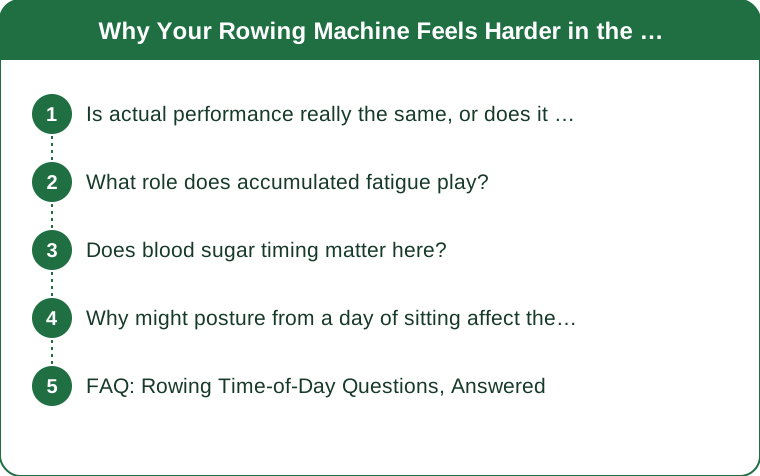
Is actual performance really the same, or does it decline too?
Objectively, most people’s raw physical capacity doesn’t drop meaningfully from morning to afternoon on the same day. What changes more is perceived effort — the same split and stroke rate can genuinely feel harder even when your split times end up nearly identical to a morning session.
What role does accumulated fatigue play?
By afternoon, you’ve been awake for hours, possibly worked, commuted, or handled a stressful morning. This background fatigue doesn’t necessarily lower your rowing output, but it raises the effort it takes to hit the same output, which is why the same split can feel like it costs more.

Does blood sugar timing matter here?
Often, yes — an afternoon session before a meal, especially several hours after lunch, can coincide with lower blood glucose, which affects perceived exertion more than actual power output for most moderate-intensity efforts. A small pre-row snack sometimes closes most of this gap for people who notice a consistent afternoon slump.
Why might posture from a day of sitting affect the row?
Hours of sitting can leave hip flexors tighter and thoracic mobility slightly reduced compared to first thing in the morning. This can make the catch position and full extension feel more restricted, which shows up as extra effort even at the same stroke rate and resistance setting.
FAQ: Rowing Time-of-Day Questions, Answered
Should split time targets be adjusted for afternoon sessions?
It’s reasonable to allow a slightly higher perceived-effort tolerance for the same split in the afternoon rather than assuming fitness has declined.
Does a warm-up matter more for afternoon rows?
A slightly longer warm-up (2-3 extra minutes) can help offset the reduced morning mobility advantage that comes from not having been sitting all day.
Is this pattern the same for everyone, or does it vary by person?
It varies — some people perform better later in the day due to individual circadian rhythm differences, so ‘afternoon feels harder’ isn’t universal, just common enough to be worth accounting for.
TL;DR:
- Afternoon rows often feel harder due to perceived effort, not an actual drop in physical capacity
- Accumulated daily fatigue and lower pre-meal blood sugar both raise perceived exertion
- Hours of sitting can leave hips and thoracic spine slightly less mobile than in the morning
- A longer warm-up or a small snack beforehand can close much of the afternoon gap
If an afternoon row feels tougher than the numbers explain, it’s a normal time-of-day pattern rather than a sign your rowing fitness has slipped.
Keep Reading
This article is for general informational and styling purposes only. Fit, sizing, and product availability may vary.