The Actual Cause of Lower Back Pain on the Rowing Machine
Quick Answer: Most rowing-related lower back pain comes from rounding the lower spine at the catch (the compressed starting position) or from using the arms and back to pull before the legs finish driving, both of which load the lumbar spine in a way the movement was never designed to — fixing the sequence (legs, then back, then arms) resolves it in most cases far more reliably than resting alone.
Rowing gets called low-impact and back-safe constantly. That reputation assumes correct form, which is doing a lot of the work in that sentence.

What’s actually happening at the catch that causes pain?
A rounded lower back at the catch (the forward, compressed position) puts the lumbar spine under load right as the powerful leg drive begins, which is close to the worst possible position for that amount of force. A neutral or very slightly hinged spine at the catch — not rounded — keeps that same leg drive force from transferring into the lower back instead of the legs.
How does pulling with the arms too early cause back strain?
The correct sequence is legs drive first, then the back swings open, then the arms pull last — reversing this and yanking with the arms/back before the legs finish extending shifts a large amount of force onto the lower back muscles that weren’t meant to generate that power. This is one of the most common form errors, especially under fatigue late in a workout when sequencing tends to break down first.
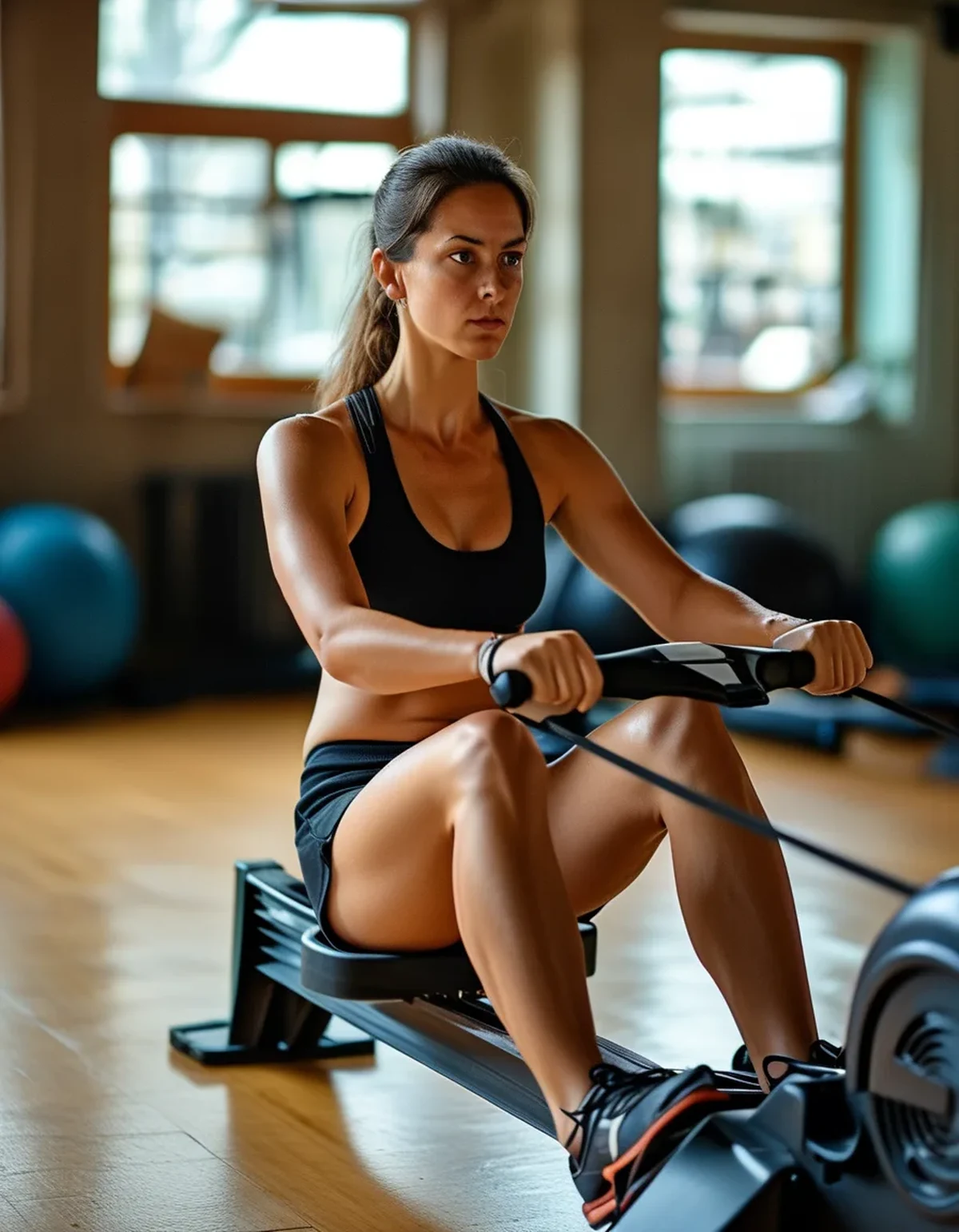
Rowing Form Breaks Down at the Catch — What to Check
Film yourself from the side for 10 strokes and check two things: is your lower back rounded (not just hinged) at the catch, and are your arms starting to pull before your legs are fully extended? Both are visible on video even if they’re hard to feel in the moment, especially once fatigue sets in during the second half of a workout.
FAQ: Rowing Back Pain Questions, Answered
Is rowing generally still considered good for people with back issues?
Yes, with correct form — rowing is often recommended as low-impact cardio, but that reputation assumes proper catch position and sequencing, not rowing with any technique at all.
Should I stop rowing entirely if my lower back hurts?
Not necessarily — for mild soreness, correcting the catch position and stroke sequence often resolves it within a few sessions. Sharp or persistent pain that continues despite form correction is worth a professional evaluation before continuing. This is general information, not medical advice.
Does a rowing machine’s damper setting affect back strain risk?
Indirectly — a damper set too high encourages yanking with the upper body to move the flywheel, which increases the odds of the exact arms-before-legs error that strains the back. A moderate damper (3-5) usually supports better sequencing.
TL;DR:
- Most rowing back pain traces to a rounded catch position or pulling with the arms too early
- Correct sequence is legs, then back, then arms — reversing it loads the lumbar spine
- Filming your side profile for 10 strokes reveals both issues clearly
- A damper set too high can encourage the exact upper-body-first error that causes strain
Rowing’s reputation as back-friendly holds up well — it’s just conditional on a sequence that’s easy to get wrong under fatigue.
Keep Reading
This article is for general informational and styling purposes only. Fit, sizing, and product availability may vary.