Why the Floor Your Erg Sits On Changes Your Split
Quick Answer: A rower is not bolted down, so every stroke pushes the machine slightly backwards and pulls it slightly forwards. On a hard floor the machine slides and absorbs part of that; on carpet or a thick mat it grips and does not. That changes how much of your leg drive reaches the flywheel, and it changes the rail angle by a degree or two, which alters your catch position. Splits differing by one to three seconds between locations with identical drag factor is entirely normal.
If your home numbers never match your gym numbers, you probably have not got worse.
You have changed one of the least-discussed variables in the sport.
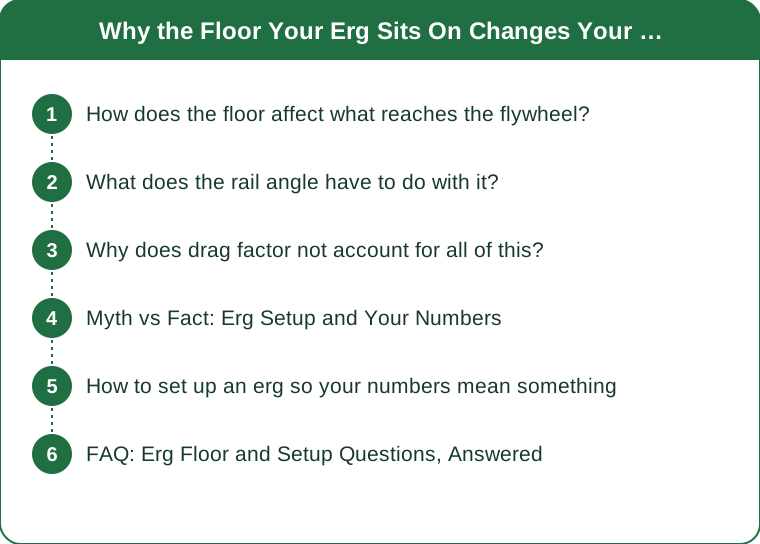
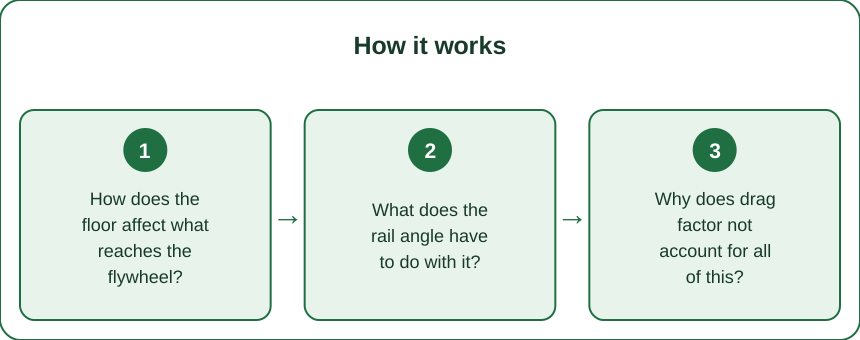
How does the floor affect what reaches the flywheel?
Through the machine’s own movement.
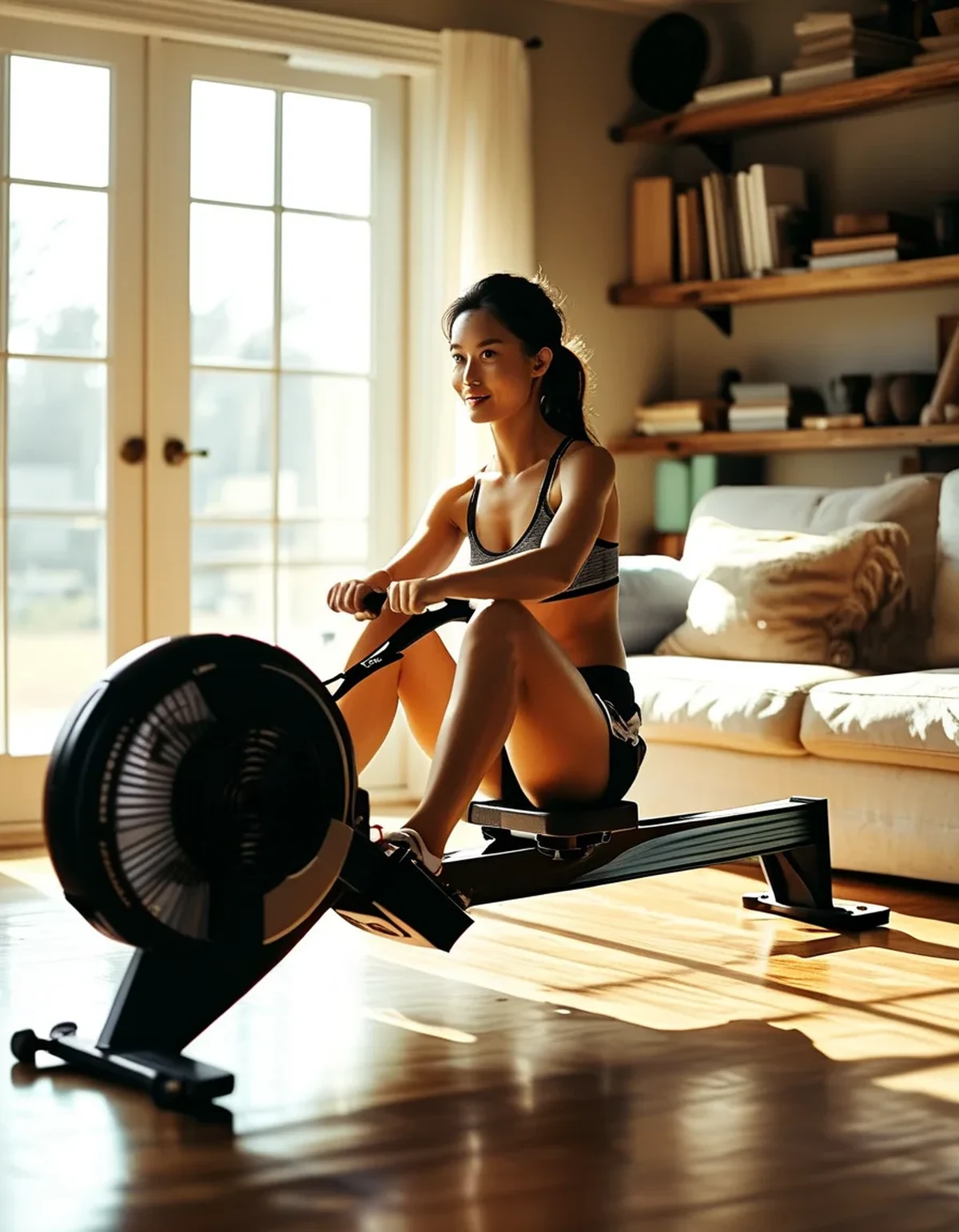
At the catch you push against the footplate with a considerable force, and the rower is a free-standing object. Newton’s third law applies: your drive pushes the machine backwards while it pushes you forwards. On a slick hard floor the machine actually moves a small amount — you can see it creep across a room over a long piece.
Energy that moves the machine is energy that does not spin the flywheel.
On a high-friction surface — rubber gym flooring, a proper erg mat, thick carpet — the feet grip and the machine stays put. More of your drive goes into the chain.
The effect is small per stroke and cumulative over a piece. It is most noticeable at high force, low rate work — the exact conditions where people test themselves — because that is when peak force per stroke is highest and the machine is most inclined to shift.
This is why a hard, smooth floor tends to produce slightly worse splits than a grippy one at the same effort, which is the opposite of what most people expect.
What does the rail angle have to do with it?
It changes where your catch actually is.
Most air rowers have front feet and a rear support at different heights, and the rail runs at a slight incline. That incline is part of the design. Change the surface under either end and you change the angle.
Carpet compresses. A thick mat compresses. If the front feet sit on a dense area and the rear support sits on a softer one — or the machine straddles the edge of a mat, which is extremely common in a spare room — the rail tilts by a degree or two.
A degree does not sound like much. Over a rail that is well over a metre long, it moves the seat height at the catch by a noticeable amount and changes the angle at which you compress at the front end. Rowers who move a machine from a mat to a bare floor often report the catch feeling cramped or loose without being able to say why.
It also affects the recovery. On a rail that is slightly steeper, the seat wants to run back towards the catch faster, which subtly changes your drive-to-recovery ratio without any conscious decision on your part.
Check that all contact points sit on the same surface. It is the single most common home-gym erg setup error.
Why does drag factor not account for all of this?
Because drag factor measures the flywheel, not the room.
Drag factor is a genuinely useful number — it describes how quickly the flywheel decelerates between strokes, which is the closest thing to a standardised resistance setting. Setting the same drag factor on two machines makes them comparable in the way that matters most.
But drag factor is measured on the flywheel alone. It knows nothing about whether the machine slid backwards during your drive, whether the rail is at the design angle, or whether the frame flexed slightly on an uneven floor.
Air temperature and humidity add a further layer, since drag factor is genuinely affected by air density. A cold garage in October and a warm gym in August will read differently for the same damper setting — which is why you set drag factor rather than damper number in the first place.
So the honest position is this: drag factor removes most of the machine-to-machine variation and none of the floor variation. Two machines at drag 120 in different rooms are more comparable than two at damper 5, but they are not identical.
Which matters mainly for one thing — comparing your numbers across locations, which is exactly what people do.
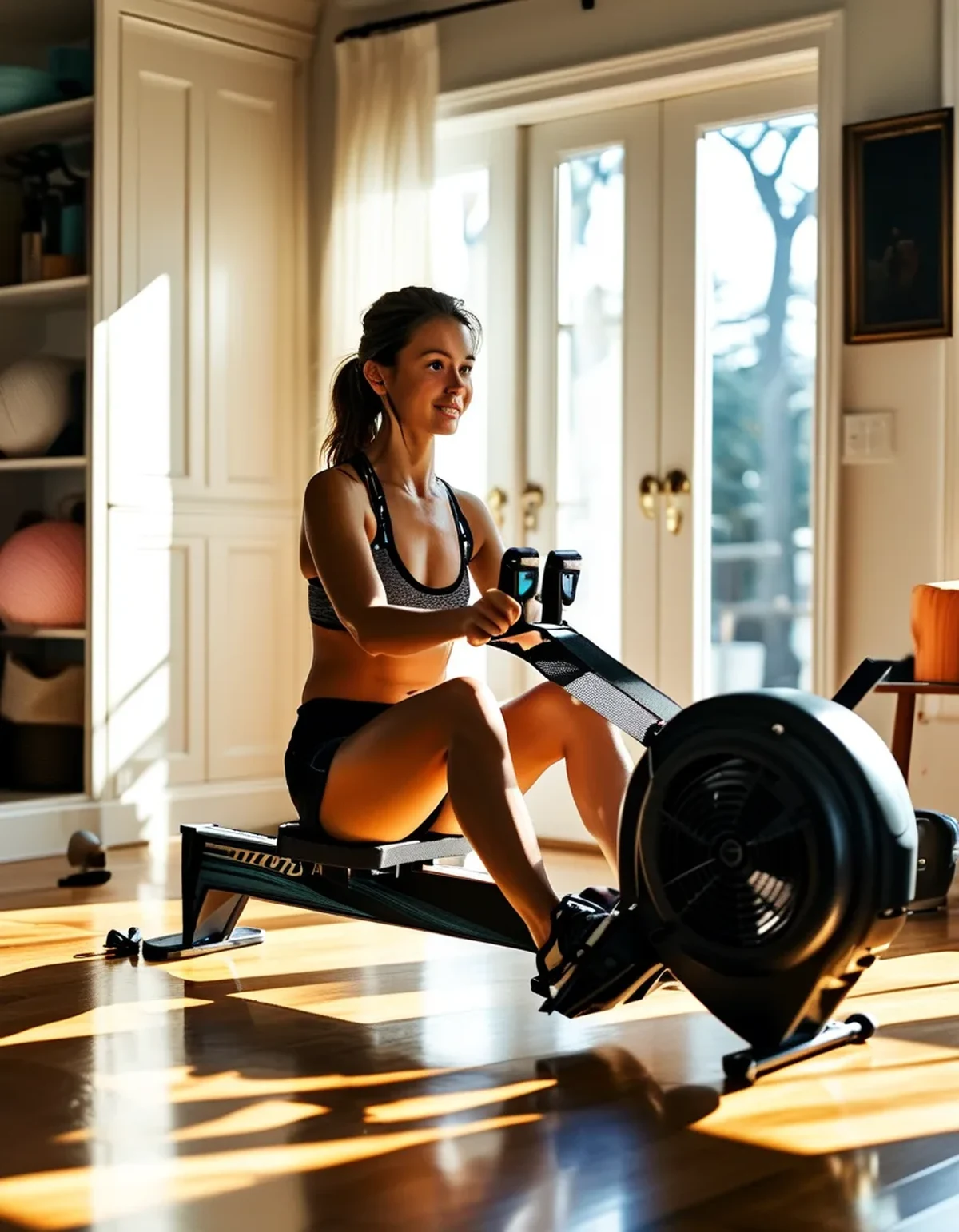
Myth vs Fact: Erg Setup and Your Numbers
Myth: A rower gives the same reading anywhere because the flywheel does not care about the room.
Fact: The flywheel does not care, but how much of your force reaches it depends on whether the machine stays still. A sliding machine loses energy that never reaches the flywheel at all.
Myth: A softer surface is kinder to the machine and to you.
Fact: A thick soft surface under an erg is the main cause of rail-angle problems and frame instability. A thin, dense mat is what you want — it protects the floor and grips the feet without compressing meaningfully.
Myth: If the drag factor matches, the machines match.
Fact: Drag factor standardises the air resistance. It says nothing about machine movement, rail angle, or frame flex.
Myth: Any difference is just how you felt that day.
Fact: Day-to-day variation is real and typically covers a second or two of split. But a consistent one-to-three second gap between two locations, in the same direction every time, is not mood — it is setup.
Myth: Putting the machine on carpet solves everything.
Fact: This is the fix that creates the second problem — carpet grips beautifully and compresses unevenly, so you solve the sliding and introduce a rail angle change. A thin rubber mat under all contact points does both jobs.
How to set up an erg so your numbers mean something
A short list that removes most of the variability.
Put every contact point on the same surface. Front feet and rear support, both fully on the mat or both fully off it. Straddling an edge is the worst option available.
Use a thin dense mat, not a thick soft one. Something in the range of 6 to 10mm of dense rubber grips well and compresses negligibly. Yoga mats and foam tiles are too compressible.
Check the machine is level side to side. An erg on a floor that slopes even slightly towards a drain — common in garages — loads one side more than the other and produces exactly the asymmetric back soreness people blame on technique.
Mark the machine’s position. Tape on the floor at the front feet. If the machine has crept by the end of a hard piece, you now know how much energy was going into moving it.
Set drag factor, not damper, and record it in your log alongside the location. Somewhere around 115 to 130 suits most recreational rowers.
Log the location with every piece. Home and gym numbers are two different data sets. Comparing within each is meaningful; comparing across them is not.
And if you are testing, test in the same place every time. A 2k in the garage and a 2k at the gym are two different tests, and the one that matters is the one you can repeat.
FAQ: Erg Floor and Setup Questions, Answered
How big is the difference really?
In practice, most people see one to three seconds of split between a good setup and a poor one at the same effort. That is a lot over a 2k, and it is entirely invisible if you are not looking for it.
Does this apply to water and magnetic rowers too?
The sliding effect applies to any free-standing rower. The rail angle issue applies to any machine with separate front and rear contact points. Water rowers tend to be heavier and slide less, which helps.
My machine creeps forward, not backward. Why?
Creep direction depends on the balance between your drive phase and the handle return, and on the surface. Either direction indicates the same underlying issue — the machine is moving when it should not be.
Should I bolt it down?
Not necessary for most people, and not practical in most homes. A dense mat and a level surface get you nearly all the benefit.
Is a garage floor in autumn a problem?
For drag factor, yes — cold dense air raises drag factor at the same damper setting. Reset the drag factor rather than the damper as the weather cools, and your numbers will stay comparable.
TL;DR:
- A rower is free-standing, so energy that moves the machine never reaches the flywheel
- Thick or uneven surfaces change the rail angle by a degree or two, which changes your catch position
- Drag factor standardises the flywheel and accounts for none of the floor effects
- Use a thin dense mat with every contact point on the same surface, and check the machine is level
- Log the location with every piece; home and gym numbers are different data sets
If your gym splits and your home splits have never agreed, put a piece of tape on the floor at the front feet and row a hard interval. Whether the tape still lines up afterwards tells you most of what you need to know.
Keep Reading
This article is for general informational and styling purposes only. Fit, sizing, and product availability may vary.