Why Your Lower Back Takes Over on the Rowing Machine Instead of Your Legs
Quick Answer: Rowing is meant to be roughly 60% legs, 20% core/back lean, and 20% arms in terms of power sequencing, but when the legs fire late or weakly, the body compensates by yanking the handle with the back and arms first — a sequencing error that concentrates load on the lower back and explains why many rowers feel it there instead of in their legs and glutes where the power should originate.
The fix is almost always about sequencing, not about the back being ‘too weak’ or the machine being unsuitable.

The Correct Power Sequence on Every Stroke
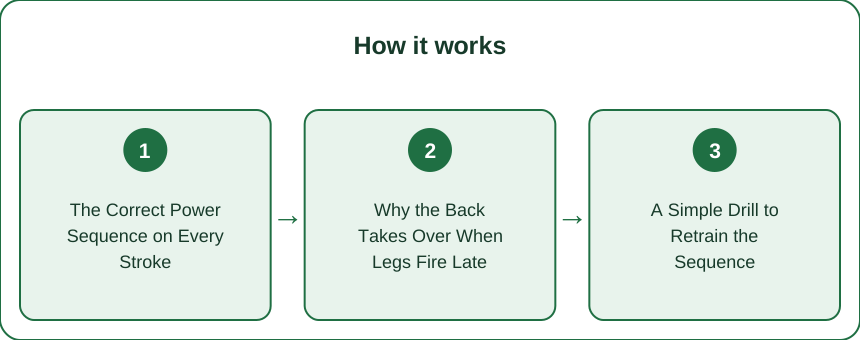
A proper rowing stroke drives with the legs first, pushing the seat back while the arms and torso stay relatively still and extended; only once the legs are nearly fully extended does the torso lean back slightly, followed last by the arms pulling the handle to the chest. Reversing this order — pulling with the arms and back before the legs have done their share of the work — is the single most common form breakdown seen in both new and experienced rowers.
Why the Back Takes Over When Legs Fire Late
If the legs push weakly or hesitate at the start of the stroke, the body still needs to generate power to move the handle, and it defaults to whatever muscles are positioned to pull immediately — typically the lower back and arms. This isn’t a conscious choice; it’s a compensation pattern that happens automatically when the intended prime mover (the legs) isn’t doing its share of the load.
A Simple Drill to Retrain the Sequence
Legs-only rowing — performing strokes using only the leg drive while keeping the arms and back completely passive and extended — isolates the first phase of the stroke and builds the habit of leading with legs before the mind adds the back-and-arm phases back in. Spending several minutes on this drill before a full-stroke rowing session is a common and effective way to retrain the correct sequence.

Why the Catch Position Matters as Much as the Drive
A rushed or collapsed catch position — arms not fully extended, shins past vertical, shoulders rounded forward — sets up the entire rest of the stroke to compensate incorrectly, since the legs don’t have a clean starting position to drive from. Resetting to a tall, extended catch position every single stroke, even at the cost of slower pace initially, is worth prioritizing over speed while the sequence is being corrected.
Why Damper Setting Doesn’t Fix a Sequencing Problem
It’s a common assumption that a rowing machine’s damper setting (which controls resistance feel, not difficulty) is responsible for back strain, but damper setting has little bearing on power sequencing — a rower with poor leg-first mechanics will feel back strain at nearly any damper setting, while a rower with correct sequencing generally doesn’t, regardless of the setting used.
What Nobody Tells You About Rowing and Core Engagement
The ‘core’ in rowing isn’t primarily doing crunching work — it’s doing isometric stabilization, keeping the spine in a neutral, braced position throughout the stroke rather than actively flexing or extending it. Lower back discomfort during rowing is frequently a sign the core isn’t bracing to hold that neutral position, allowing the lower back to take on load it wasn’t meant to bear, rather than a sign the core muscles themselves are too weak.
FAQ: Rowing Form Questions, Answered
Is some lower back fatigue after rowing normal, or always a sign of bad form?
Mild fatigue after a hard session can be normal, but any sharp pain, or fatigue that’s disproportionately in the lower back compared to the legs, points toward a sequencing issue worth addressing.
How long does it take to correct a leg-first sequencing habit?
Most rowers notice a meaningful shift within 2-3 weeks of deliberately practicing legs-only drills and slower, sequenced full strokes before returning to normal pace.
Should beginners row at a slower pace while fixing their form?
Yes — prioritizing correct sequencing over speed during the correction period leads to both better form retention and, generally, better performance once the pattern is fixed.
TL;DR:
- Correct rowing sequence is legs first, then torso lean, then arms — roughly 60/20/20 in power contribution
- When legs fire late or weakly, the body compensates by pulling with the back and arms, concentrating strain there
- Legs-only drills and a tall, reset catch position retrain the correct sequence
- The core’s job in rowing is isometric bracing, not active crunching — weak bracing lets the lower back absorb load it shouldn’t
Back strain on the rowing machine is rarely a sign rowing is bad for your back — it’s usually a sign the legs aren’t leading the stroke the way they’re supposed to.
Keep Reading
This article is for general informational and styling purposes only. Fit, sizing, and product availability may vary.